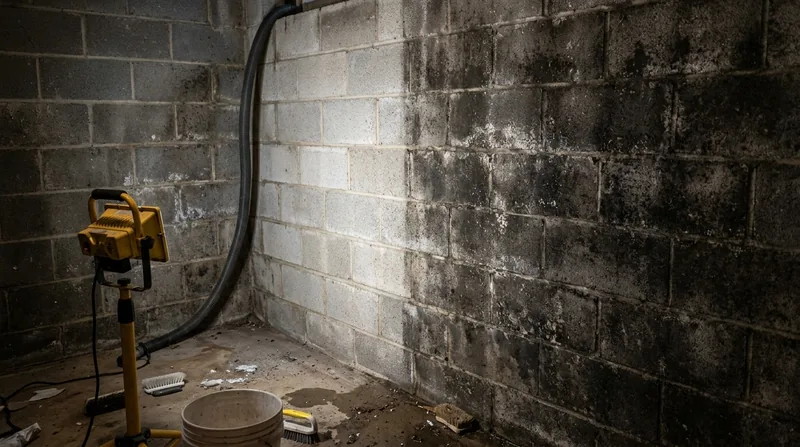




Basement mold remediation in Canton starts with one hard truth: the mold is a symptom, and the water is the cause. Our city sits on glacial till and heavy clay over shale, and that ground holds spring melt and heavy rain like a sponge before it seeps into basement joints. The 1900s brick and frame houses in Hills and Dales and on the older east and north side streets were built with stone, brick, or early block walls that wick moisture straight through. The 1940s to 1960s ranches and Cape Cods on the south and east sides have partly finished basements where a musty smell shows up before any visible growth. We find the moisture source, remove the affected material, and fix the drainage so the mold does not come back. If you are still at the wet-basement stage, start with basement waterproofing in Canton and we will tell you honestly what the wall is doing.
Why Basement Mold Grows So Fast in Canton's Older Housing Stock
Canton's failure mode is not a one-time flood. It is slow, seasonal seepage through brick, block, and stone walls that stay damp for weeks after the Nimishillen Creek and Tuscarawas River valleys rise. Long freeze-thaw winters open hairline cracks in older block, and each spring the water table pushes moisture through them under hydrostatic pressure. That steady dampness, not a burst pipe, is what feeds mold on joists, sill plates, drywall, and stored goods.
- White efflorescence on the wall means water is moving through the masonry and leaving mineral salts behind.
- A musty smell in a finished room usually points to damp framing or carpet over a wet slab, not to surface mold alone.
- Block walls in older Canton homes hold water in their cores and release it inward for days after rain.
- Poured concrete basements in 1970s to 2000s subdivisions in North Canton, Louisville, and Green grow mold at the cove joint and along cold-water pipes that sweat in summer.
- Failed sump pumps or short discharge lines let water pool at the low corner and stay there.
Every one of these conditions is a moisture problem first, and treating the mold without correcting the water source only buys time.
Key info: A home on an older east side street with a stone foundation and white powder on the walls is a different job from a 1990s Green subdivision basement with a wet cove joint. We test the moisture before we quote the remediation.
Ohio's building codes and local permit rules are set by the jurisdiction, so verify any structural or drainage work with the City of Canton building department before work begins: City of Canton official site.
How We Run Basement Mold Remediation in Canton From Diagnosis to Clearance
We do not fog a basement and call it remediation. We find the moisture source, contain the work area, remove what cannot be saved, treat what can, and then correct the water path so the conditions for mold growth are gone. The order matters, because remediation done before the leak is fixed is wasted money.
- We walk the basement and grade, check the sump basin and discharge line, and meter the walls and framing to map where moisture is coming from.
- We set up containment with plastic sheeting and negative air pressure so spores do not spread into the finished part of the house.
- We remove porous material that cannot be cleaned (wet drywall, insulation, saturated carpet) and bag it for disposal.
- We treat affected framing, joists, and masonry with a mold-specific product and HEPA-vacuum the surfaces.
- We correct the source: crack injection, interior perimeter drain, sump replacement, or grading and downspout extension, depending on what the diagnosis shows.
- We dry the space with dehumidification and air movers, then verify moisture readings before we call the job done.
When the diagnosis points to a wet wall rather than a plumbing leak, the fix usually lives in an interior drain tile system that captures water at the footing and sends it to the sump.
Key info: A Louisville ranch we inspected had mold on the bottom two feet of drywall and a sump that ran only in spring. The real problem was a clogged drain tile line under the slab, not the drywall. We cleared the line, replaced the sump, and removed the affected drywall in one visit.
Remediation and Moisture-Control Methods We Use in Canton Basements
No two Canton basements get the same treatment. The method follows the moisture source, the wall type, and how much of the space is finished. Here is how the main approaches compare.
| Approach | Description | Best for |
|---|---|---|
| Containment and surface treatment | Seal the work zone, HEPA-vacuum, and treat framing and masonry with a mold-specific product. | Light growth on joists and walls where the leak is already fixed. |
| Material removal and rebuild prep | Cut out wet drywall, insulation, and carpet, then dry the framing before closing the wall. | Finished basements with growth behind baseboard or under carpet. |
| Drainage correction | Interior perimeter drain, drain tile repair, or sump replacement to move water away from the wall. | Recurring seepage at the cove joint after rain. |
| Crack injection and wall sealing | Epoxy or polyurethane injection into block and poured-wall cracks, plus sealing of porous masonry. | Isolated cracks that weep after snowmelt or heavy rain. |
| Vapor control and dehumidification | Vapor barrier on walls and slab, plus controlled drying of the space. | Damp, musty basements with no single visible leak. |
We recommend the lightest method that actually solves the moisture problem, and we say so when simple crack sealing is enough.
Basement Mold Remediation Cost in Canton: What to Expect
Most Canton basement mold jobs start around From $1,500, and that figure covers a defined area of growth with the moisture source identified. The number moves with square footage affected, how much finished material has to come out, and whether drainage work is part of the fix. A small patch on exposed joists in an unfinished 1920s east side basement is a different ticket from a finished Green walkout with wet carpet and a failed sump.
- Square footage of affected surface is the biggest driver, because removal and disposal scale with it.
- Finished walls and ceilings add labor, since drywall has to come out and be replaced after drying.
- Drainage corrections (interior drain tile, sump replacement, crack injection) are quoted separately and often prevent the return.
- Access matters in older Canton homes with narrow stairs and low headroom.
- Emergency calls after a spring storm or sump failure cost more than scheduled work.
Get two or three estimates and ask each contractor to explain the moisture source, not just the mold count. Our full pricing overview breaks down the ranges before you call.
Basement Mold Remediation Near Me: How to Vet a Contractor Near Canton
Mold work is only as good as the moisture diagnosis behind it, so the contractor you hire should be able to explain why the basement is wet, not just how to clean it. Ask direct questions and expect direct answers. A company that only quotes remediation without addressing drainage is selling you a repeat visit.
- Confirm the company is licensed and insured, and ask for a certificate of insurance before work starts.
- Get at least two or three written estimates that separate remediation from drainage repair.
- Ask for references from Canton-area jobs with the same wall type as yours (stone, block, or poured).
- Ask who pulls any permit required for structural or drainage work, and verify the rule with the local building department.
- Get the warranty terms in writing, including whether it transfers if you sell the house.
We will tell you when a $600 crack injection solves the problem and when the wall is telling you something bigger. Reach us through the contact page or call (330) 919-5552 to set up a free basement inspection.
Basement Mold Remediation in Canton: Pricing Guide
| Service | Price | Details |
|---|---|---|
| Surface treatment and containment | Starting at $1,500 | Covers containment, HEPA vacuuming, and treatment of a defined area of growth on framing or masonry. |
| Removal and rebuild prep | Starting at $2,800 | Includes cutting out wet drywall, insulation, and carpet, then drying framing before the wall is closed. |
| Remediation with drainage correction | On estimate | Priced after diagnosis because drain tile, sump, or crack injection scope varies by wall type and access. |
| Emergency response | On estimate | After-hours or storm-driven calls carry a premium; scope depends on standing water and affected square footage. |
| Travel | Included | In Canton and surrounding areas, no separate call-out or mileage fee. |
| Estimate | Free | Response within 24h at (330) 919-5552, no obligation to book. |
Indicative pricing, the exact cost depends on square footage, finish, and site access. Free personalized estimate within 24h at (330) 919-5552.


